Untold stories: DEI backlash hampers Delco farmstead’s slavery-education project
Amid the Trump administration’s rescission of federal funding for projects that touch on diversity, equity, and inclusion, a museum in Ridley Creek State Park is struggling to achieve its goal of educating visitors about the role of slavery on an 18th century Quaker farmstead.
“Currently, the project is a little stalled, and we hate to say that, because it’s super important,” Sarah Lerch, executive director of the Colonial Pennsylvania Farmstead, told Fideri News Network.
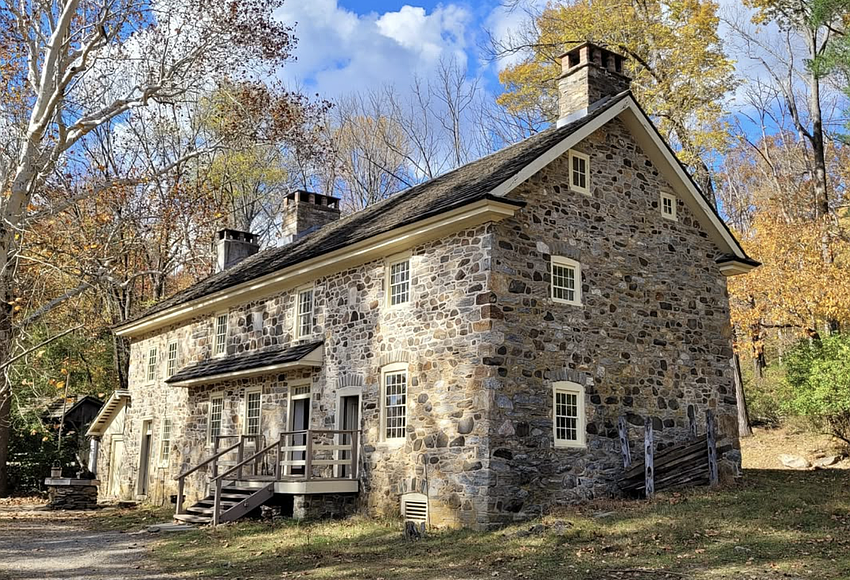
The Colonial Pennsylvania Farmstead is a nonprofit, 112-acre working farm and museum located in Ridley Creek State Park that draws visitors in late March through November, hosts both field trips and summer camps, offers workshops, and more. It allows visitors to “directly participate in the daily seasonal tasks of the past,” such as shearing sheep in May and harvesting wheat in July.
Rather than focus on major historical figures like George Washington or Benjamin Franklin, the farmstead’s goal is to illuminate what life was like for a typical family “during a really transformative period in American history,” Lerch said, referring to the American Revolution.
Lerch said the genesis of the idea to research slavery’s role in colonial agricultural life started around 2020, when board members decided to start exploring the “untold stories of the farmstead.”
The board discovered the names of four enslaved individuals who lived and worked on the farm when it was run by the Pratt family in the 1700s: Peggy, Cuffy, Susanna and York. Lerch said the goal was to conduct more research and turn that knowledge into educational programming at the farmstead, with an eye toward correcting misconceptions.
“The first level is, folks don’t necessarily associate slavery with the North; the second layer is, folks don’t associate slavery with Quakers,” she said.
But eventually, “we realized that we were doing this research kind of in a vacuum — and it was exclusively older, white individuals doing this,” Lerch continued. So the board applied for grant funding to help power a “community-oriented project” that brought in stakeholders like Temple University’s Center for Public History, the African American Genealogy Society in Philadelphia, and experts like those who work at the Museum of the American Revolution’s African American Interpretive Program.
Project grant disappears
The farmstead received approval in December 2024 for a $25,000 grant from the National Endowment for the Humanities (NEH), and it was prepared to make an announcement in January 2025. However, the board never got a chance to fill out one remaining piece of paperwork, as it was locked out of the government grant system’s online portal around the time President Donald Trump took office.
By early spring, “all communication had ceased from our grant folks — most likely because they were no longer employed with NEH,” Lerch said.
The Colonial Pennsylvania Farmstead was one of many organizations that saw their project funding disappear after the Trump administration canceled most grants from the NEH, citing a shift in priorities, and redirected funding toward new projects aligned with the president’s agenda. The NEH also implemented significant staff reductions.
Project is moving ‘at a slower pace’
Now, the farmstead’s project “is moving at a much slower pace than we would like,” Lerch said. However, the organization isn’t giving up on its goal of educating the public on the part that enslaved people played in everyday colonial life in Southeastern Pennsylvania.
For example, she said staff members have been taking classes on how to interpret slavery to the public, or for populations like children and teens. And farmstead staff added all the information they learned about Peggy, Cuffy, Susanna and York — as well as their role in the broader historical context — to the organization’s website.
Additionally, Americana Corner provided funding for the farmstead to create interpretive placards with key information about slavery at the farm, which are set to be unveiled when the museum opens for the season in March 2026. And generally, Lerch said, visitors, volunteers and staff have all “been supportive of us continuing to do this initiative.”
Still, the farmstead hasn’t been able to attract the level of funding it would have gained from the NEH grant, from either private or estate donors, Lerch said. “We’re finding it’s kind of a tough sell…especially earlier in the year, when there was a lot of conversation at a national level [about] DEI and some other initiatives.”